
Pitt County 72-Hour Feed Gap
No official Pitt County Sheriff source was verified as a rolling 72-hour release list. The county's Detainee Search says it covers currently detained people and refreshes hourly. Its date inputs do not override that stated scope. The page does not advertise a released result, a release timestamp, a three-day retention rule, or a public release-reason codebook.
A three-day inquiry therefore has to be reconstructed from official records. The active roster answers whether the person is still listed at the time of the search. PCDC can identify the local exit or transfer field. NC SAVAN/VINELink may carry a related event, while the court file can show the order, bond, dismissal, judgment, or sentence behind the custody change. These facts should agree on identity and chronology before the event is described as a community release.
Check Pitt County 72-Hour Releases
Start the three-day check with a clear observation period and a known identifier. Write down the date and time of the first query. Search with a full booking number when possible, or match a name with birth date and case details. Then move through the custody chain. This avoids treating three separate daily snapshots as if they were an official release log.
- Check the Pitt Detainee Search and mark it “current detainees only.” Save the booking number and case details if the record is still active.
- Call PCDC Inmate Information at 252-902-2868 during published business hours. For after-hours or holiday help, call 252-902-2913.
- Ask for the existing release or transfer field tied to the booking, including the date, time, type, and receiving agency when public.
- Review NC SAVAN/VINELink for a matching event and note which jail or corrections agency supplied it.
- Compare the event with the Pitt case in the North Carolina court Portal or the Clerk's record.
- If state prison is involved, check the NCDAC Inmate Releases search and ordinary OPI detail rather than the county jail roster.
The Pitt County 24-Hour Release List workflow is better for a same-day question. For one known person whose custody system is uncertain, start with the Pitt County released inmate search. The three-day process adds more weight to dates, weekend gaps, and sequential custody because a person may move through more than one system during that span.
Pitt County Three-Day Fields
Because Pitt County has no public 72-hour release table, there are no official feed columns to claim. A useful three-day account combines fields from the jail, court, and notification sources without merging their meanings. Ask for the booking-linked release record when a date or destination is needed. Ask for a court record when the legal authority matters.
| Field | What it establishes |
|---|---|
| Full name and booking number | Connects the custody event to the correct Pitt booking. |
| Booking or admission date | Identifies the custody spell that ended or changed. |
| Release date and time | Records the physical exit when supplied by the custodian. |
| Release authority or type | Distinguishes bond, court order, time served, sentence end, or another recorded basis. |
| Destination or receiving agency | Separates community release from transfer to another custodian. |
| Case or docket number | Links the jail event to the legal action in the court file. |
PCDC does not publish a verified list of all local release codes. Ask the Sheriff's Office for the label already stored in its system. Do not translate a blank or missing field into a reason. Likewise, a court date can explain legal authority without proving the hour that jail processing ended.
Note: Ask for existing fields and records, not a newly written narrative that the custodian does not already maintain.
Weekend Pitt County Release Checks
A 72-hour span often crosses a weekend, holiday, or more than one reporting cycle. That does not mean Pitt County retains released names for three days. The research found no fixed public retention interval, no standard processing hour, and no verified weekend sequence. The hourly refresh of the active roster only means current data are refreshed on that cadence. It does not promise that a past entry remains visible.
Use the after-hours and holiday assistance number for a narrow custody question, but do not treat it as evidence of an around-the-clock records counter. If the online court summary is unclear, the North Carolina Judicial Branch court-record guidance points to the Clerk, a public terminal, and paper copies as fallback channels. A paper judgment may clarify time served, an active term, a suspended sentence, or probation. It still should be paired with the jail event.
The research also found no official family waiting point or public exit location at PCDC. Do not send someone to monitor a facility exit. Release timing can shift as staff verify court authority, complete processing, or identify another hold. Call the relevant office and plan from confirmed information.
Pitt County Release Data Quirks
The sharpest Pitt County data distinction is between current local custody and historical state-prison release. The Pitt application is a current-only jail roster. NCDAC has a dedicated Inmate Releases tab that can search by county, year, and month. A Pitt query uses release-county code 74 and can return offender number, name, release date, primary offense, and type of release.
That state search is monthly, not a county 72-hour feed. “Release county” is the destination recorded by NCDAC, not necessarily the county of imprisonment or conviction. A person may leave a prison elsewhere and be released to Pitt County. By contrast, someone who spent only a short period in PCDC and bonded out may have no NCDAC entry because OPI does not include county-jail data.
| Source | Time scope | Correct reading |
|---|---|---|
| Pitt Detainee Search | Current, refreshed hourly | Present PCDC custody at the check time. |
| PCDC release record | Booking-specific | Local exit or transfer event and its recorded fields. |
| NCDAC Inmate Releases | Monthly interface | State-prison releases recorded to Pitt County. |
| NC court record | Case history | Legal action, judgment, sentence, bond, or probation context. |
When the state release search was observed, its year choices covered three calendar years. That observation must not be stated as a legal retention rule. Older state history may remain in ordinary OPI or through NCDAC records even if it does not appear in the dedicated release tab's current selector.
Verify Pitt County Release Events
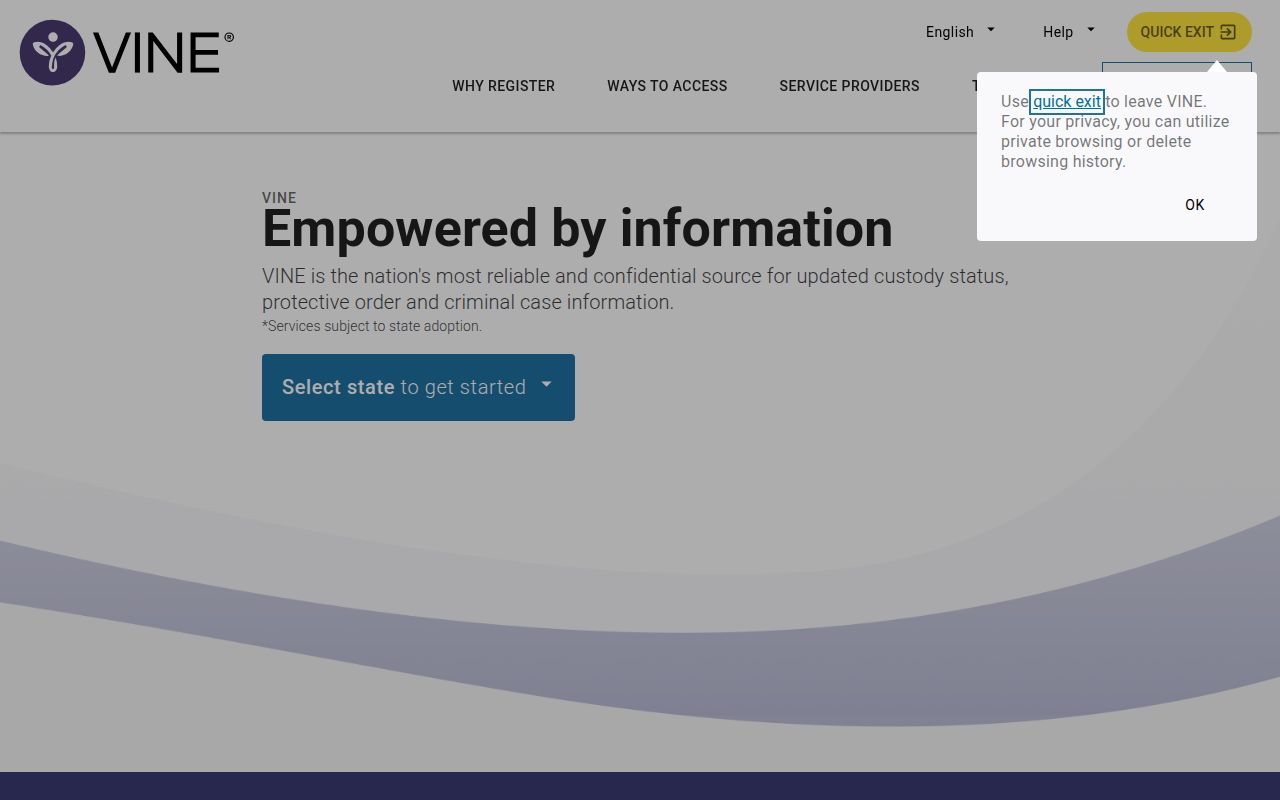
NC SAVAN/VINELink is the best notification and corroboration layer across participating North Carolina county jails and the state prison database. Choose North Carolina, search by name or ID, match the reporting facility and identity, and inspect the status, event, and date. A released or out-of-custody result reflects what the source agency reported. It does not certify the release type, court authority, or an unrestricted return to the community.
The official VINELink search can show the transition that prompts a follow-up call. The captured search below demonstrates the state selection and person-specific workflow used to locate a reported event.
Match that event to PCDC for a local stay or to NCDAC OPI for state imprisonment. Preserve the notice time, but use the custodian's record when durable proof of the event is needed.
The North Carolina court Portal adds legal context. A bond entry can be consistent with pretrial release while the charge remains pending. A dismissal matters only if no other hold exists. A judgment can show time served, a sentence, or probation. None of those entries alone guarantees that PCDC completed physical processing at the same time.
Note: VINELink is an agency-fed alert source, not a certified release record, and its event may lag the underlying custodian.
Released or Transferred From Pitt
Over three days, sequential custody becomes more likely. A person can disappear from the Pitt roster and appear as an active inmate in NCDAC. That is a transfer into state confinement, not community release. The correct account records the PCDC departure and the NCDAC admission or movement. Similar care applies to transfers to another county, the U.S. Marshals Service, or ICE.
A direct Pitt County release may involve bond, court conditions, sentence expiration, time served, or dismissal when no other hold remains. Yet physical release does not prove that a case ended. Probation may start, and a pending case can continue after bond. For state-prison records, read the actual release date and inmate status separately from probation, parole, or post-release status. Leaving prison confinement is not always full discharge from correctional oversight.
- Release
- Departure from a custodian under a recorded authority, which may still be followed by supervision.
- Discharge
- Completion of the custody or supervision obligation identified by that system.
- Transfer
- Movement to another custodian while confinement or legal custody continues.
- Detainer
- A request or hold connected to another authority; it is not proof that a later transfer or release occurred.
Request Pitt County Release Records
When the three-day reconstruction remains unclear, request the existing booking or release sheet from the Pitt County Sheriff's Office. Provide the full name, known birth date, booking number, admission date, and case number. Ask for the release date and time, release authority or type, and destination or receiving agency if transferred. A precise request is easier to route and reduces the chance of mixing two people with similar names.
The Pitt County Detention Center is at 124 New Hope Road, Greenville, NC 27834. Its main number is 252-902-2850, and Inmate Information is 252-902-2868. Published regular hours are Monday through Friday, 8 a.m. to 4 p.m. The after-hours and holiday assistance number is 252-902-2913. Call before an in-person visit because those hours do not establish a walk-in public records counter.
If the event concerns state prison, request public admission and release basics from NCDAC rather than PCDC. For the legal authority, obtain the Pitt judgment or order from the Clerk. Each office should be asked only for its part of the chain. Date every response and quote the public field that was confirmed instead of reducing the result to “not listed” or “free.”