
Pitt Regional Juvenile Release Limits
Pitt Regional Juvenile Detention Center is a state-operated juvenile facility, not Pitt County's adult jail. Its youth records are not a branch of the Pitt detainee application. No official public channel was verified that lists children held there, names children who left, publishes their photos, or supplies a recent-release window. That absence reflects a protected juvenile process. It is not a missing adult-style feature to replace with unofficial data.
A juvenile may leave detention under an order from the juvenile court. The next place may be a parent or guardian, another approved placement, or a different facility. A transfer and a return to family are not the same event. The court and juvenile justice system determine what information an authorized person may receive. A public reader should not try to reconstruct the event from a child's absence, a rumor, or an adult custody database.
Confirm Pitt Regional Juvenile Release
Release confirmation begins with the caller's authority. A parent, guardian, attorney, or other person recognized in the juvenile matter should use the directions already supplied by the facility or court. The facility can explain its identity and authorization process. Counsel can work through the juvenile case. A person without a recognized role should expect the agency to protect the youth's information.
- Use the official facility contact and identify your relationship to the juvenile without sharing more private data than staff request.
- Ask what secure method is required to verify identity, authority, and access to case-specific information.
- If the matter turns on a court order, contact counsel or the juvenile court through the authorized case channel.
- Distinguish return to a guardian, placement, and transfer. Ask only for information the agency is permitted to disclose.
- Follow the court or facility instructions for pickup, placement contact, or another next step. Do not rely on an adult roster.
This route protects the child while directing a proper party to the record holder. It also avoids a major factual error. A youth who is not shown in a public search has not thereby been proven released. There may be no public record to search in the first place.
Note: Callers should ask the agency for a secure identity method before sending any sensitive document or youth information by ordinary email.
Pitt Regional Juvenile Release Contacts
The North Carolina juvenile detention center directory is the official source for the facility's listing. It identifies Pitt Regional Juvenile Detention Center at 451 Belvoir Road in Greenville and gives 252-830-6590 as its phone number. The research did not verify public release-desk hours, a public email for case details, or a walk-in release-record counter.
Pitt Regional Juvenile Detention Center
451 Belvoir Road
Greenville, NC
252-830-6590
Call for authorized-contact instructions; no public released-youth lookup was verified.
The official state listing shown below establishes the correct facility and contact channel. It does not make juvenile identities or release details public.
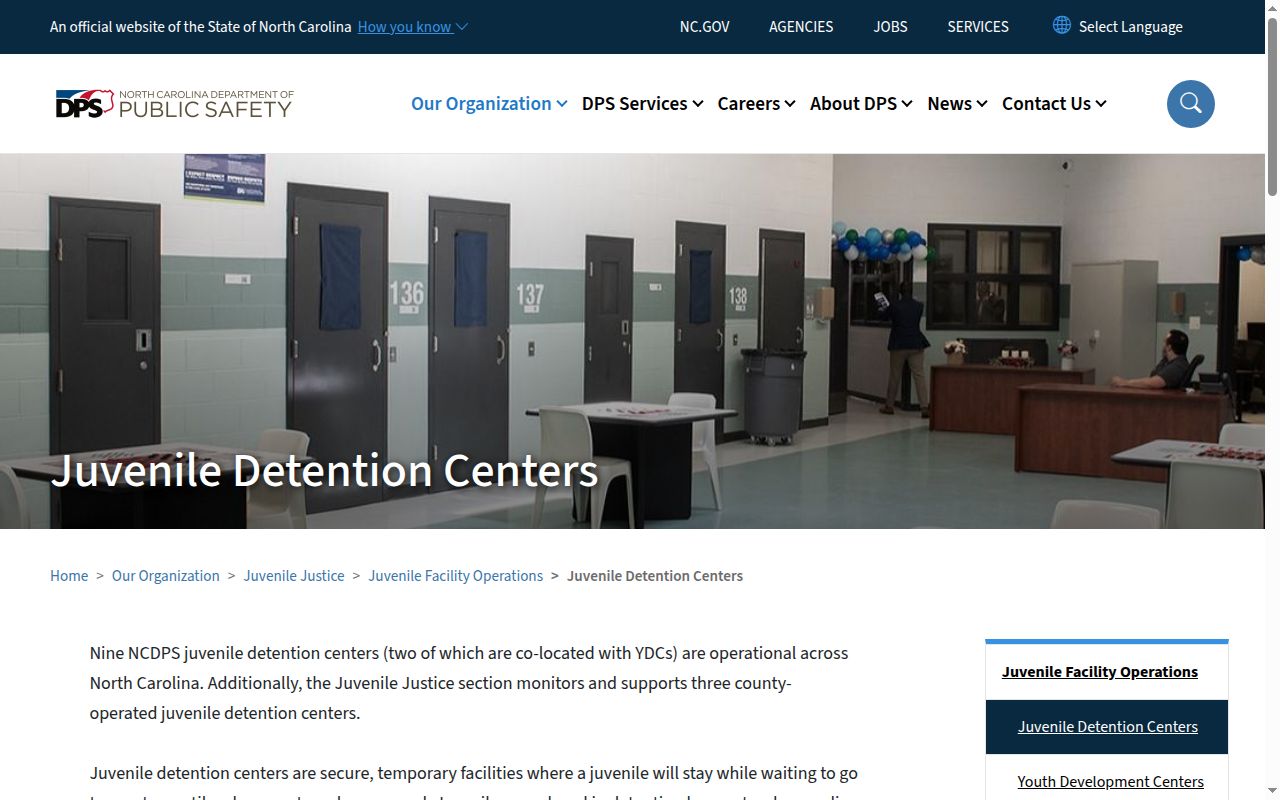
Use that listing to reach staff and learn the proper authorization process. Do not treat the image as a roster, release log, or case record.
Pitt Regional Juvenile Facility Facts
The state directory describes Pitt Regional as an 18-bed juvenile detention center serving the region. It is separate from Pitt County Detention Center, which is the Sheriff's adult local confinement facility. Capacity describes the facility, not a current population count. It does not show whether any named youth is present or has left.
Juvenile detention is also distinct from a state adult prison. The North Carolina Department of Adult Correction's OPI search is built for adult prison and supervision records. It is not the lookup for Pitt Regional youth. Likewise, the Pitt County Detainee Search covers current adult detainees at PCDC, not juveniles at this state facility.
Pitt Juvenile Court Release Records
A court order and a facility movement answer different questions. The juvenile court supplies the legal authority or placement direction. Facility staff handle the physical custody transition under that authority. An order date may not equal the exact time the child left the building. An authorized party should reconcile the order with the facility's instructions instead of using one timestamp for both.
North Carolina's general court-record system preserves many determinative legal actions, but disclosure is subject to laws that restrict confidential matters. The general public-record principle does not override juvenile confidentiality. A public terminal or paper-file route that works for an ordinary adult criminal case does not promise access to a juvenile case. Court staff decide what can lawfully be disclosed and to whom.
The Judicial Branch court-record guidance explains general terminal, paper, and copy channels. The captured official guidance below is a routing reference, not proof that a particular juvenile record is open.
Ask the juvenile court or counsel for the proper case-specific method. Do not use the adult public-terminal process to bypass a restriction.
Note: A legal order may direct release or placement, while the facility remains the source for its own physical movement process.
Adult Searches Exclude Juvenile Releases
The adult Pitt County released inmate search routes PCDC, NCDAC, federal, and immigration custody. None of those systems should be repurposed to look for a child at Pitt Regional. The PCDC roster concerns current adult local custody. NCDAC OPI concerns adult state imprisonment and supervision. BOP and ICE serve separate federal purposes, and ICE guidance excludes people under 18 from its public locator.
This boundary prevents mismatched records and harmful assumptions. A youth can share a name with an adult in another system. Even a correct adult match says nothing about the juvenile case. Never join names, dates, photos, or allegations across those sources in an attempt to fill a confidential gap.
- Juvenile detention
- Secure temporary custody governed through juvenile justice and juvenile-court authority.
- Placement
- A court-approved or agency-approved setting to which a young person may go.
- Transfer
- A movement between custodians or placements, not necessarily return to a parent or guardian.
- Release
- A custody change that must be understood through the juvenile order and authorized facility process.
Protect Pitt Juvenile Release Information
Juvenile confidentiality follows the information beyond the first phone call. Authorized parties should keep court directions, placement details, identification, and contact data within the secure channels specified by the responsible office. A child should not be named in a public post merely because someone is trying to coordinate a pickup or determine whether a movement occurred.
Public-record laws have exceptions. North Carolina's broad definition of public records does not turn every government-held item into an open record when another law makes it confidential. Courts and custodians also may have to protect information about other people found in the same file. For Pitt Regional, the controlling practical rule is simple: ask the facility, counsel, or juvenile court what an authorized person may obtain.
When an answer cannot be disclosed, that result should remain a gap. It is not sound to fill the gap with an adult search, a private post, or a guess based on absence. A careful account states only the authorized fact, the office that supplied it, and the date it was confirmed. It should not expose the youth's destination or family arrangements beyond what the responsible court or facility permits.