
Pitt County Mugshot Records
A booking photograph is one record created during an arrest or commitment. North Carolina law permits law-enforcement photographs in circumstances set out by G.S. 15A-502. That authority does not make every image available through a public gallery. Pitt County's custodian must still decide what record it holds, whether it is administrative or investigative, and whether another law restricts access.
Release does not change what the image proves. It shows the person's appearance at the time and source event. It does not prove guilt, dismissal, sentence completion, or current supervision. A photo can remain visible after physical release, and a missing photo does not prove expunction. Always pair the image with a booking number, date, court case, or NCDAC offender number. That second identifier is vital for common names and old files.
Pitt County Mugshot Channels
No single official Pitt County released-mugshot archive was verified. The active jail detail, a narrow Sheriff's records request, a state corrections profile, the qualifying-offender registry, and local reporting are separate discovery channels. They should not be merged as if each photograph came from the same booking system. VINELink may report custody events, but it is not a dependable photo archive.
| Channel | Has photo? | How to access |
|---|---|---|
| Pitt detainee detail | Inspect a current detail; the landing page does not promise a photo or released archive. | Search the official current-detainee application while the person is still listed. |
| Sheriff records request | Possible, not guaranteed. | Ask for one identified booking photograph with booking number and date. |
| NCDAC OPI | Yes for many people who entered state corrections. | Search the offender profile and label it as a DOC photograph. |
| NC qualifying-offender registry | May show a current registry image. | Use only for a person subject to registration; it is not a general release search. |
| Local news or booking coverage | Sometimes. | Treat it as a dated secondary lead and verify the official custody and court record. |
| Commercial archives | May retain copied images. | No commercial links are provided; copies may be old or lack the final disposition. |
Choose the channel based on custody. A PCDC-only bond-out may never enter NCDAC. A person released from a state prison to Pitt County can have a DOC photo that is unrelated to a local booking. A federal record may require a federal source. The official Pitt detainee search, current detainees only, is shown in the captured view below.
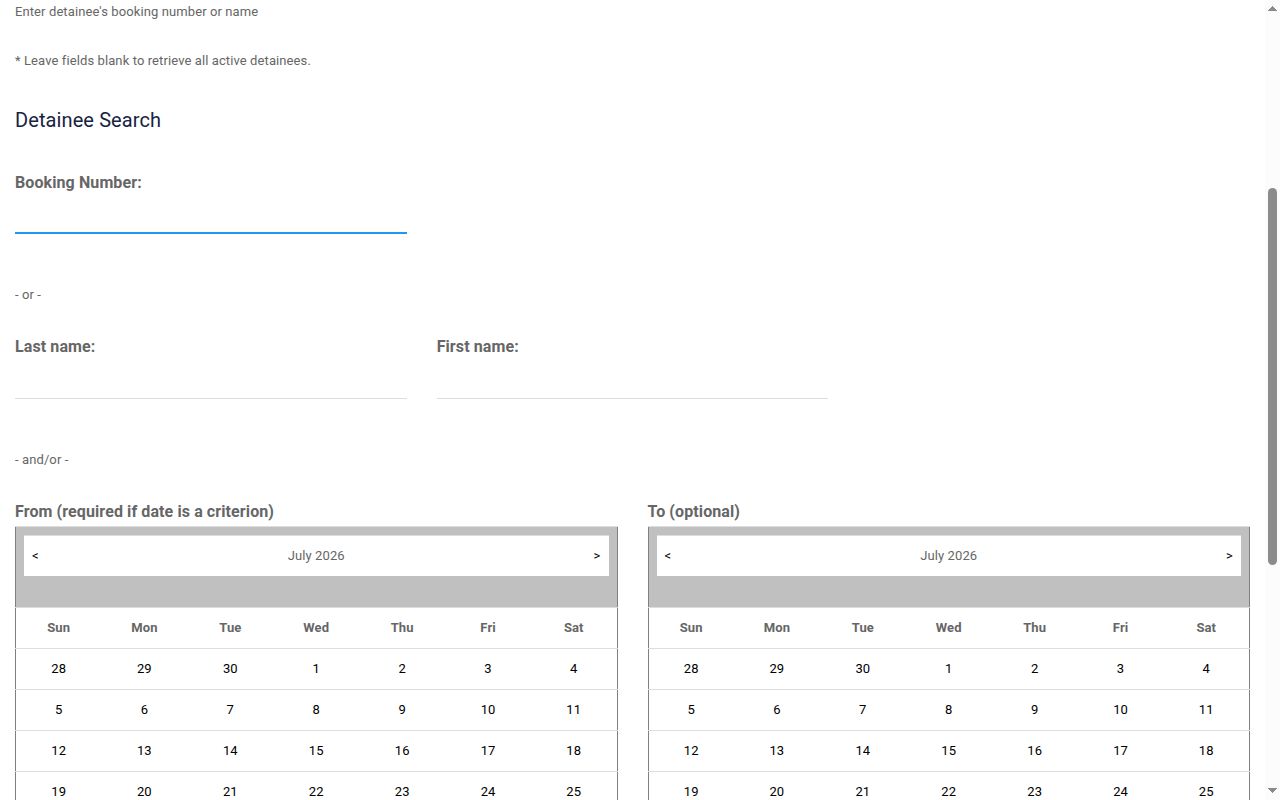
Its current-custody scope is why a released photo must be sought through a request or another source rather than called a recent-release gallery.
Pitt County Roster Mugshots
The Pitt County Sheriff's detention-center page directs readers to an application that repeatedly describes active or currently detained people and refreshes hourly. The public landing page does not promise that every active detail contains a photograph, nor does it promise that a released entry will stay online for a set period. Search by a known booking number or name, then inspect the matching detail. If the person is gone, do not use disappearance as a release code. Call PCDC or request the release field.
No official Pitt County Sheriff mobile app with a recent-release or mugshot function was verified. VINELink, HomeWAV visitation, P3Tips, and the national NSOPW registry app serve other functions. None should be described as a Pitt Sheriff release-photo app. The absence of a verified app is a real limit, not a gap to fill with a private product.
The Pitt County 24-hour release list workflow explains why the live roster cannot be renamed as a released-person feed. For a photo, use the roster only as an active-custody lead and preserve the source date.
Note: Pitt County publishes no verified retention period for released detainee details, photos, or a separate recent-release photo archive.
Request Pitt County Booking Photos
A narrow request to the Pitt County Sheriff's Office or Pitt County Detention Center is the official fallback. Ask for an existing, specifically identified image. Include enough facts to find the right booking without sending needless private data. The request can pair the photograph with release date and time, recorded release type or authority, and destination or receiving agency if the person was transferred.
- Confirm the full name, known date of birth, booking number, approximate booking and release dates, and Pitt case number.
- Ask for the booking photograph associated with that booking. Also name the discrete release fields needed.
- Request an electronic copy in its existing format. Ask the office to redact protected material rather than withhold the rest when separation is possible.
- If denied, ask for the legal basis in writing. Do not ask staff to create a new narrative or explain facts not stored in an existing record.
- Compare any image received with the case and custody identifiers before describing its source or date.
Written comments about the detainee application may be directed to Pitt County Detention Center, 124 New Hope Road, Greenville, NC 27834. Its operational number is 252-902-2868, the main number is 252-902-2850, and after-hours or holiday assistance is 252-902-2913. Confirm the right records recipient before sending identifying documents.
Under G.S. 132-6, inspection is allowed at reasonable times and copies should be supplied as promptly as possible. North Carolina sets no universal fixed-day deadline for an ordinary Chapter 132 request. Under G.S. 132-6.2, ordinary uncertified copies generally cannot exceed actual reproduction cost, though an extensive request may carry a reasonable special-service charge.
NCDAC's public-record request page states the scope and limits for records held by state corrections.
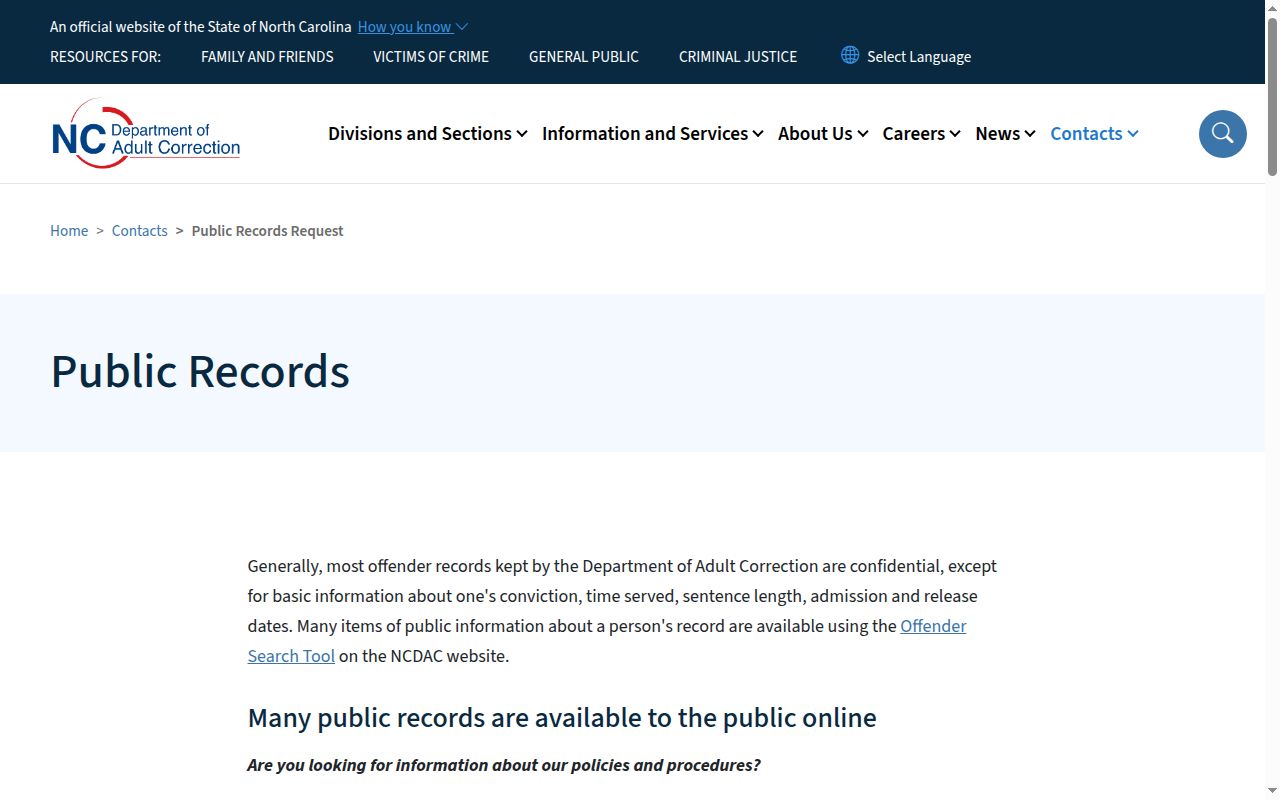
Use NCDAC for a state prison or community-supervision record, not a booking that existed only at PCDC.
Pitt County Mugshot Disclosure
North Carolina's photo rules are fact-specific. G.S. 132-1 broadly includes photographs and electronic materials made or received in public business. Yet G.S. 132-1.4 excludes criminal-investigation and intelligence records, including investigative photographs, from the general definition. Certain arrest-event facts remain public, but that does not settle the status of every image.
The Pitt custodian must classify the requested booking photo and account for an expunction, sealing order, juvenile confidentiality, or another restriction. An administrative booking image may differ from an investigative image. A specific request is appropriate, but disclosure cannot be promised. No Pitt County policy was found that guarantees permanent online publication after release or removal merely upon request.
No enacted statewide North Carolina pay-to-remove booking-photo law was verified. Bills proposed in 2021 and 2023 are not current law. Do not rely on a removal vendor's claim or another county's practice as proof of a Pitt right. Direct a correction, expunction order, or source dispute to the office that controls the record.
Note: A specific booking-photo request is the correct fallback, but North Carolina law does not guarantee that Pitt must disclose it.
Pitt County DOC Mugshots
The NCDAC OPI profile can show a photograph for someone who entered North Carolina state corrections. It may also show actual and projected release dates, last movement, sentence history, and a separate probation, parole, or PRS status. Label the image as an NCDAC or DOC photograph. It is not necessarily the Pitt County booking photo, even when Pitt is the conviction, supervision, or recorded release county.
For a completed state prison term, match the photograph and offender number to the correct sentence period. Use the actual release date and movement/status combination instead of inferring release from the image. A person can have an inactive inmate status and active supervision. Conversely, a PCDC-only stay may not appear in OPI at all.
The North Carolina Sex Offender and Public Protection Registry may display a current image for a qualifying registrant. It is not a general list of Pitt County released inmates, and the registry photo does not supply the jail release type or date. Absence means nothing for a person who has no registration duty. Follow the live registry warnings and use the Pitt County Sheriff registration page only for that limited local process. Avoid copying a registry image into a general archive.
Pitt County Mugshot News
The Sheriff website links a Daily Reflector jail-bookings channel, and local news or agency press releases sometimes publish photographs. Such material can help identify a source event, but it is secondary. A booking post does not prove that the person remained in custody, was later released, or received a particular disposition. Date the observation and return to PCDC, NCDAC, VINELink, and the court case.
Commercial mugshot publishers and data brokers may also retain copied images. No links to those services are provided. Their files can lag official corrections, omit case outcomes, or remain visible after an official record changes. Do not scrape, republish, or promise that a paid service can remove an image. Contact the original government source and court first when the issue concerns correction, sealing, or expunction.
A photograph from local reporting should be labeled as a news image, not as an official Pitt booking record unless the report clearly attributes it. Preserve the publication date. If a current official record conflicts with an old article, describe each source and date instead of declaring one image proof of present status.
Note: An old booking story can remain searchable long after release, case disposition, correction, or a later expunction order.
Pitt County Mugshot Expunction
Expunction is the North Carolina process that removes a qualifying charge or conviction from the person's record and seals or destroys specified state arrest, charge, or conviction records. It is not automatic for every release. The North Carolina Judicial Branch expunction page warns that processing can take months and private sites may not remove their copies at the same time as official systems.
Timing can depend on more than physical release. Under G.S. 15A-145.5, several waiting periods run from the later of conviction or completion of incarceration, probation, or post-release supervision. Thus leaving PCDC or prison may not begin or finish the applicable wait when supervision continues. Other provisions address certain dismissed or not-guilty charges, automated routes, confidential records, and agency notice. The exact case and order control.
If North Carolina court information remains visible a few weeks after an expunction order, the Judicial Branch directs the person to contact the clerk. For PCDC, identify the exact detainee page, booking number, disputed field, observation date, and supporting order. Ask the source agency to correct its own record and confirm the change. Avoid sending unnecessary identity files by ordinary email before the agency offers a secure method.
The official North Carolina expunction guidance is captured below.
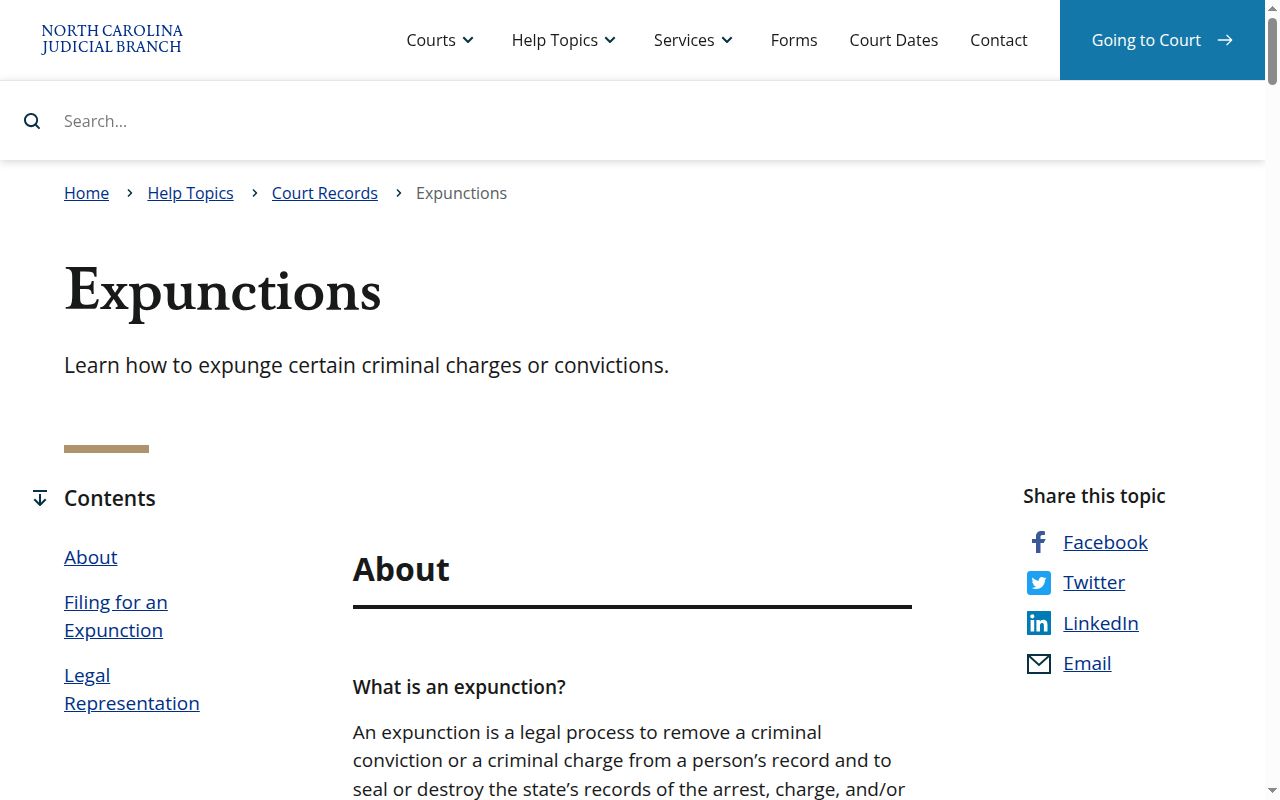
When an order or correction applies, reassess copied text, images, alt text, metadata, and downloadable files, not only the visible case summary.
Verify Pitt County Mugshots
For each photograph, record four facts: the source, the date observed, the identity number, and the custody event tied to it. Then check the Pitt court case for disposition and judgment. A bond order may authorize release without proving the jail completed processing. A dismissal in one case may coexist with another hold. A state profile may document a transfer rather than community release.
The Pitt County released inmate search provides the full route for reconciling PCDC, court, NCDAC, VINELink, federal, and records-request sources. Keep the image claim narrow. “Pitt County booking photograph dated [date]” or “NCDAC offender photograph observed [date]” is more accurate than calling either one a current mugshot of a released person.
When facts conflict, ask the originating office for correction and cite the exact record. A photograph is one piece of a custody history. The release date, destination, court authority, and continued supervision require their own records.